
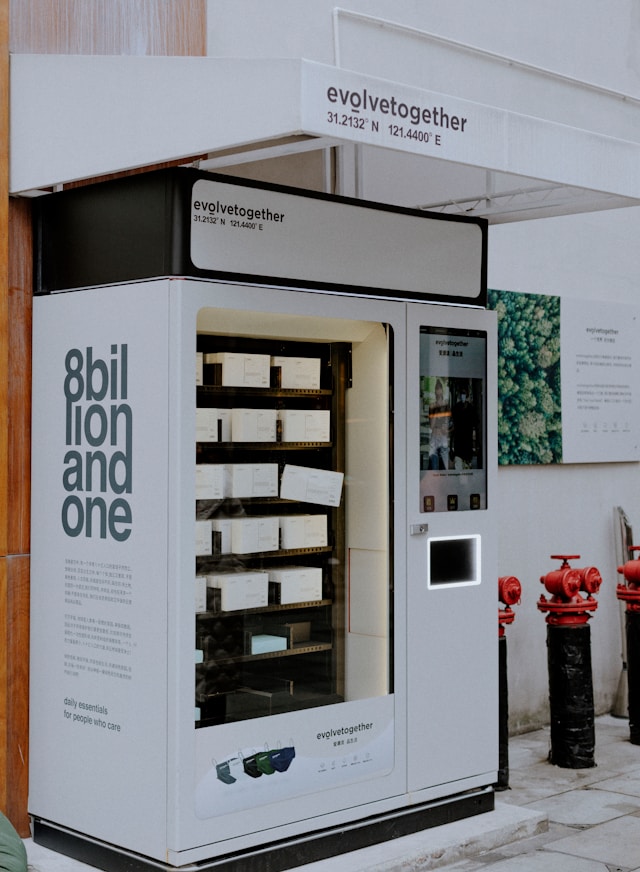
Vending Machine For Rent Demand in Singapore’s F&B Sector
Singapore’s F&B market is changing fast, and Vending Machine For Rent demand is rising as food businesses look for leaner, more flexible ways to reach customers. Restaurants, beverage brands, snack sellers, and food entrepreneurs are under pressure to manage labor costs, high rents, and changing buying habits. In that environment, vending machines are no longer seen as simple snack dispensers. They are now a practical retail channel for modern F&B operations.
This article explains why vending machine rental demand is growing in Singapore’s F&B sector. It covers labor constraints, convenience culture, 24/7 sales access, compact space needs, wider product variety, cashless payments, and low-overhead expansion opportunities. If you run an F&B business or are considering an investment in automated retail, this guide will help you understand why the model is gaining ground.
Why Singapore’s F&B market is driving vending demand
Singapore is one of the most competitive F&B markets in Asia. Consumer demand is strong, but so are operating costs. Rental pressure, manpower shortages, and changing customer expectations make it harder for traditional outlets to grow without taking on more risk.
This is one reason vending machines are gaining attention. They offer a smaller and more controlled way to sell food and drinks without the full burden of a staffed retail setup.
For many operators, the appeal is simple:
- Lower staffing needs
- Smaller physical footprint
- Faster setup
- Flexible placement
- Longer selling hours
- Easier product testing
These advantages matter in Singapore, where every square foot and every staff hour affects profit.
Vending Machine For Rent growth is linked to labor constraints
Labor is one of the biggest challenges in Singapore’s F&B sector. Hiring costs have risen. Shift planning is harder. Staff turnover remains a real issue in many food businesses. Even well-run operators can struggle to maintain service levels without increasing payroll pressure.
Why manpower shortages support Vending Machine For Rent demand
A Vending Machine For Rent model reduces the need for full-time front-line staff at every sales point. A machine can operate without a cashier, without a service crew member standing on-site, and without daily opening and closing routines in the same way a shop requires.
For F&B operators, this creates a more efficient structure. Instead of hiring one team per outlet, a small operations team can manage multiple vending points through restocking, maintenance, and remote monitoring.
This model is especially attractive for:
- Beverage brands
- Packaged meal sellers
- Dessert concepts
- Grab-and-go snack businesses
- Frozen food retailers
- Specialty product sellers
In each case, the machine helps reduce dependence on labor-heavy storefront operations.
Labor efficiency matters more in smaller F&B formats
Not every F&B brand needs a full dine-in concept. Many products are built for speed and convenience. If the customer only needs to choose, tap, and collect, a vending machine can handle the transaction more efficiently than a staffed counter.
That matters for brands trying to expand without adding payroll strain. In a market where labor costs can quickly erode margins, automated selling points become easier to justify.
Convenience culture is reshaping food buying habits
Singapore consumers are used to convenience. They expect fast transactions, digital payments, and easy access to products near where they live, work, study, or travel. This behavior supports vending growth in a direct way.
Vending Machine For Rent fits modern convenience culture
A Vending Machine For Rent works well in a market where customers value speed over browsing. Many food purchases are not long decision-making events. They are practical, immediate, and need-based.
People often want:
- A quick drink before commuting
- A packaged meal between meetings
- A late-night snack near home
- A dessert or coffee without queueing
- A simple food option in places with limited retail choices
Vending machines meet that need well because they reduce friction. The customer does not need to wait for staff attention or stand in a long line. They can complete a purchase in minutes.
Urban lifestyles make automated retail more appealing
Singapore’s dense urban layout also helps vending demand. In office buildings, hospitals, transport-linked spaces, schools, and residential developments, people often prefer the quickest possible purchase route.
This makes vending a strong fit for daily-use F&B products. The more time-sensitive the purchase, the stronger the vending case becomes.
24/7 access creates new sales windows
One of the clearest advantages of vending in F&B is extended selling time. Traditional food outlets are limited by staff schedules, tenancy terms, and operating cost. Vending machines can often keep selling far beyond normal retail hours.
Why 24/7 access strengthens Vending Machine For Rent appeal
A Vending Machine For Rent gives F&B operators access to sales periods that may otherwise be too expensive to serve with staff. This includes:
- Late-night residential demand
- Early-morning commuter demand
- Overnight staff in hospitals or industrial areas
- Students needing food outside regular canteen hours
- Office workers staying late
For the right product mix, these extra hours can add meaningful revenue without requiring a second shift of employees.
Around-the-clock access supports customer loyalty
Availability matters. If customers know they can reliably find your product at any time, that convenience can strengthen repeat buying. This is especially true for beverages, packaged foods, frozen items, and other fast-purchase categories.
In Singapore, where convenience often drives repeat consumer behavior, being available at the right hour can be a competitive edge.
Compact footprint makes expansion easier
Retail space in Singapore is expensive. Even a small shop can carry heavy fixed costs once rent, utilities, and fit-out expenses are added. That is why compact selling formats are gaining attention.
Vending Machine For Rent reduces space pressure
A Vending Machine For Rent needs far less space than a retail shop or kiosk. That smaller footprint can open up locations that would not work for a traditional outlet.
Examples include:
- Condo common areas
- Office lobbies
- Hospital corridors
- Factory break zones
- School compounds
- Transport nodes
- Small mall corners
This creates more placement opportunities for F&B operators who want to be present in high-traffic areas without paying for a full unit.
Small footprint lowers occupancy risk
The smaller the required space, the easier it becomes to manage cost. In many cases, machine placement involves simpler rental terms or commission-based arrangements instead of a long and expensive retail lease.
That lowers downside risk. If one location underperforms, the operator may be able to relocate the machine more easily than exiting a full tenancy agreement.
Product variety is expanding beyond snacks and canned drinks
The old image of vending is narrow. Many people still think of chips, canned soft drinks, and basic candy. But vending in Singapore’s F&B sector now includes a much wider range of products.
Vending Machine For Rent now supports more F&B categories
Today’s Vending Machine For Rent setups can support far more than standard convenience snacks. Depending on machine type and temperature control, operators can sell:
- Fresh beverages
- Packaged meals
- Sandwiches and wraps
- Frozen food
- Ice cream
- Healthy snacks
- Protein products
- Specialty desserts
- Coffee capsules
- Ethnic food items
- Ready-to-cook products
This wider product range is one reason F&B demand is rising. More brands now see vending as a channel that can match their offer, not limit it.
Better machine technology supports category growth
Modern vending machines can offer chilled, frozen, or ambient storage. They can also support product display, inventory tracking, and smart payment integration. These features help F&B brands sell more confidently through automated channels.
As machine quality improves, the gap between vending and micro-retail continues to shrink.
Cashless payments make vending easier to use
Singapore is one of the most cashless-ready markets in the region. Consumers are comfortable using cards, mobile wallets, QR systems, and contactless payment methods in daily transactions.
Vending Machine For Rent benefits from cashless behavior
A Vending Machine For Rent becomes much more attractive when the payment process is smooth. Cashless payment systems reduce one of the old barriers to vending adoption. Customers no longer need coins or exact change. They can tap and complete the purchase quickly.
For F&B businesses, this improves:
- Transaction speed
- Customer convenience
- Payment accuracy
- Sales tracking
- Operational efficiency
The easier the transaction, the more likely the machine is to capture impulse and convenience-driven purchases.
Digital payment data can support better decisions
Cashless systems also give operators clearer transaction records. This can help track:
- Best-selling products
- Peak purchase times
- Location performance
- Price sensitivity
- Restocking needs
That kind of data is useful for F&B brands trying to refine product mix and improve profitability across multiple vending sites.
Low-overhead expansion is attracting brands and investors
Growth in F&B usually comes with cost. New outlets require capital, staff, and fixed overhead. That is why many operators are looking for lower-risk ways to expand.
Vending Machine For Rent offers a leaner expansion model
A Vending Machine For Rent allows brands to expand in smaller steps. Instead of opening another shop, they can place one machine in a targeted location and test real customer demand.
This can work well for:
- Existing F&B brands testing new districts
- Online food brands entering offline retail
- Importers testing local demand
- Startups launching with limited capital
- Investors seeking lower-overhead retail models
The ability to scale one machine at a time is a major advantage. It gives operators more control over cash flow and reduces the size of each expansion decision.
Lower overhead improves testing and experimentation
Because the cost base is smaller, brands can test:
- Different product mixes
- Different price points
- Different locations
- Different customer segments
- Seasonal or limited-run items
This kind of experimentation is harder in a full retail setup, where fixed costs are much higher and mistakes are more expensive.
Singapore locations that support strong F&B vending demand
Demand is not equal everywhere. The success of vending in F&B depends heavily on location quality.
High-demand sites often share the same traits
Good vending locations in Singapore usually have some combination of:
- Steady foot traffic
- Limited nearby food choices
- Need for fast service
- Long operating hours
- Repeat customer patterns
That is why promising areas often include hospitals, campuses, office towers, transport-linked buildings, dormitories, gyms, and residential clusters.
F&B operators need location strategy, not just machine access
A vending machine alone does not create demand. The product must match the location, and the location must support the buying habit. For example, a healthy snack mix may do well in gyms and offices, while frozen meals may perform better in residential sites.
The strongest operators treat vending as a location-based retail strategy, not just a machine placement exercise.
What this demand means for F&B businesses in Singapore
The rise in vending demand shows a broader shift in how food retail works. F&B businesses are looking for models that are more efficient, more flexible, and less exposed to the cost structure of traditional outlets.
For many operators, vending is not replacing all storefront retail. Instead, it is becoming a useful second channel. It can support market entry, off-hour sales, product testing, and neighborhood expansion without the full cost burden of a new outlet.
That makes it attractive not only to large brands, but also to smaller businesses that want a practical route into physical retail.
Conclusion
Demand for Vending Machine For Rent solutions is growing in Singapore’s F&B sector because the model fits the realities of the market. Labor constraints are pushing operators toward automation. Convenience culture supports fast self-service buying. Twenty-four-hour access opens new sales windows. Compact footprints reduce rental pressure. Product variety is wider than before. Cashless payments improve usability. And low-overhead expansion gives brands a more flexible way to grow.
For F&B businesses and investors, the opportunity is clear. If the product suits fast, convenient purchase behavior, vending can be a smart way to enter new locations, test demand, and build revenue with lower operational strain. In Singapore’s high-cost food market, that kind of efficiency is becoming harder to ignore.